

BIPIN CHANDRA PAL
July 16, 2026
CHAUDHARY MOHAR SINGH
July 16, 2026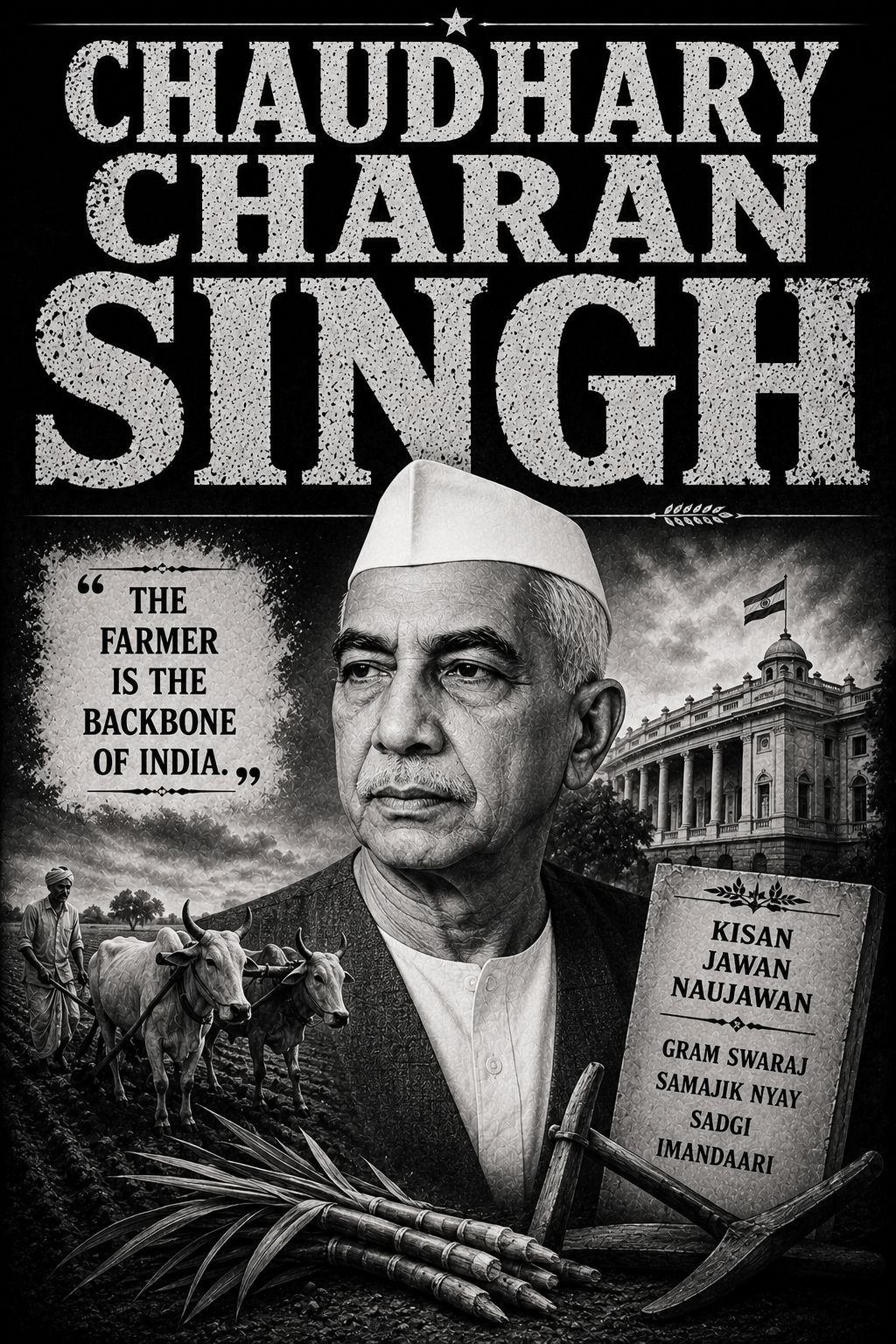
CHAUDHARY CHARAN SINGH
Original price was: ₹199.00.₹9.00Current price is: ₹9.00.
The empire modernised its extraction; he engineered the architecture of rural liberation. The post-colonial state looked to the city; he anchored the republic to the soil.
For generations, the economic spine of India was systematically drained by a triple alliance of colonial administrators, wealthy absentee landlords (zamindars), and predatory moneylenders. When independence arrived in 1947, the mainstream metropolitan leadership sought to build a centralized, capital-intensive heavy industrial state—a model that treated the vast countryside as a secondary colony designed merely to provide cheap raw resources for urban factories. Chaudhary Charan Singh, a farmer’s son from the mud-brick villages of western Uttar Pradesh, stood up in absolute, uncompromising defiance against this elite consensus.
The Tiller of the State brings together the seminal socio-economic treatises, legally precise legislative debates, and foundational policy manifestos authored by the fifth Prime Minister of India. From his early frontline battles against colonial tenancy codes at the Meerut Bar to his historic execution of the 1950 Zamindari Abolition Act—which liberated six million tenant farmers at a single stroke—this volume serves as the comprehensive legal and economic blueprint for a true Agrarian Democracy.
Contained within these pages is his theoretically rigorous, data-driven critique against state collectivization (Joint Farming X-Rayed), his structural re-engineering of the marketplace through regulated agricultural committees (mandis), and his historic 1979 federal budget that successfully executed the largest horizontal transfer of public capital from the city to the village in modern history. Far more than a simple archive of legislative triumphs, this volume documents the political synthesis of the Kisan identity, demonstrating how a fragmented, silent mass of rural producers was transformed into the most potent, unified democratic vanguard on the subcontinent. It stands as an unyielding testament to financial rectitude, a monument to spatial justice, and an immortal reminder that the true sovereignty of the republic resides in the material dignity and self-reliant power of the tillers of its soil.
Product Details
| ISBN | 978-81-17342-15-2 |
| Publication Date | July 16, 2026 |
| Last Updated | October 3, 2026 |
| Print Length | 82 pages |
| Language | English |
| Format | PDF eBook |
| Availability | Instant Download |
| Publisher | Vancriskhom Publishers |
| Compatible Devices | PC, Tablet, Mobile |
The empire modernised its extraction; he engineered the architecture of rural liberation. The post-colonial state looked to the city; he anchored the republic to the soil.
For generations, the economic spine of India was systematically drained by a triple alliance of colonial administrators, wealthy absentee landlords (zamindars), and predatory moneylenders. When independence arrived in 1947, the mainstream metropolitan leadership sought to build a centralized, capital-intensive heavy industrial state—a model that treated the vast countryside as a secondary colony designed merely to provide cheap raw resources for urban factories. Chaudhary Charan Singh, a farmer’s son from the mud-brick villages of western Uttar Pradesh, stood up in absolute, uncompromising defiance against this elite consensus.
The Tiller of the State brings together the seminal socio-economic treatises, legally precise legislative debates, and foundational policy manifestos authored by the fifth Prime Minister of India. From his early frontline battles against colonial tenancy codes at the Meerut Bar to his historic execution of the 1950 Zamindari Abolition Act—which liberated six million tenant farmers at a single stroke—this volume serves as the comprehensive legal and economic blueprint for a true Agrarian Democracy.
Contained within these pages is his theoretically rigorous, data-driven critique against state collectivization (Joint Farming X-Rayed), his structural re-engineering of the marketplace through regulated agricultural committees (mandis), and his historic 1979 federal budget that successfully executed the largest horizontal transfer of public capital from the city to the village in modern history. Far more than a simple archive of legislative triumphs, this volume documents the political synthesis of the Kisan identity, demonstrating how a fragmented, silent mass of rural producers was transformed into the most potent, unified democratic vanguard on the subcontinent. It stands as an unyielding testament to financial rectitude, a monument to spatial justice, and an immortal reminder that the true sovereignty of the republic resides in the material dignity and self-reliant power of the tillers of its soil.
Only logged in customers who have purchased this product may leave a review.
General Enquiries
There are no enquiries yet.
Related products
-
Why Should a Women Be Respected?
Original price was: ₹500.00.₹149.00Current price is: ₹149.00. EAN: 2000000000954

Reviews
There are no reviews yet.